An AI blogger can run most of the routine of a company blog: ideas, drafts, pictures, scheduling and publishing. It cannot know your facts or decide what you stand for. So the best setup is an AI blogger that does the work, and you who reads and says yes.
What is an AI blogger?
An AI blogger is a helper that plans, drafts and publishes blog posts for you, so the blog keeps going even when you are busy.
Say a small accountancy firm has had a blog for two years. It has four posts. Everybody meant to write more, and the weeks went by. An AI blogger fixes the dull part of that story: the blank page, the schedule and the publishing.
It does not replace the firm's knowledge. It carries it. The partners say what clients ask. The AI blogger turns that into posts.
Another case: a family-run garden shop that wants a seasonal blog. The owner knows exactly when to plant what, but never has an evening free. The AI blogger turns her short voice notes into posts, so her knowledge reaches customers without costing her a night a week.
So the question is not whether it can write. It can. The question is how much of the job you can safely hand over.
What can an AI blogger run on its own?
An AI blogger can run the routine parts: topic lists, first drafts, titles, pictures, calendars and publishing on the set dates.
Think of a bakery blog. The routine work is plenty: a list of twelve topics, a draft for each, a picture to go with it, the dates, the upload. None of that needs the baker's hands.
Pictures matter too. A post with a clear, simple image gets read more than a wall of words. Each article we make has its own picture in one house style, so the blog looks like one thing and not a pile of parts.
Here is a plain split of the work.
| Job | AI blogger | You |
|---|---|---|
| Topic ideas | Suggests from your customers' questions | Choose the ones that matter |
| First draft | Writes it | Supplies the facts |
| Pictures | Prepares one per post | Checks it fits |
| Dates | Sets the calendar | Agrees it |
| Publishing | Puts it live on the date | Reads before it goes |
| Facts, claims, tone | Cannot know | Decide |
What does it need from you?
It needs your facts, your voice and your yes, because those are the parts it cannot invent.
A plumber's blog post says "We always arrive within the hour." The AI blogger wrote it because it sounds friendly. If it is not true, the post makes a promise you cannot keep. Only the plumber can say.
Here is a useful habit. Keep a note called "things I said to customers this week." Five lines is plenty. That note is the best raw material a blog can have, because it comes from real questions and real answers.
It also needs your patience at the start. The first few posts will need more changes. By the third or fourth, the blogger has learned what you like, and the edits get lighter.
So the human jobs are small but real. Here is what stays with you:
- Giving the facts: what you offer, where, for whom.
- Choosing the topics that fit your business.
- Reading every post before it goes live.
- Saying no to anything that does not sound like you.
- Telling it when something in the business changes.
Is your blog ready for an AI blogger?
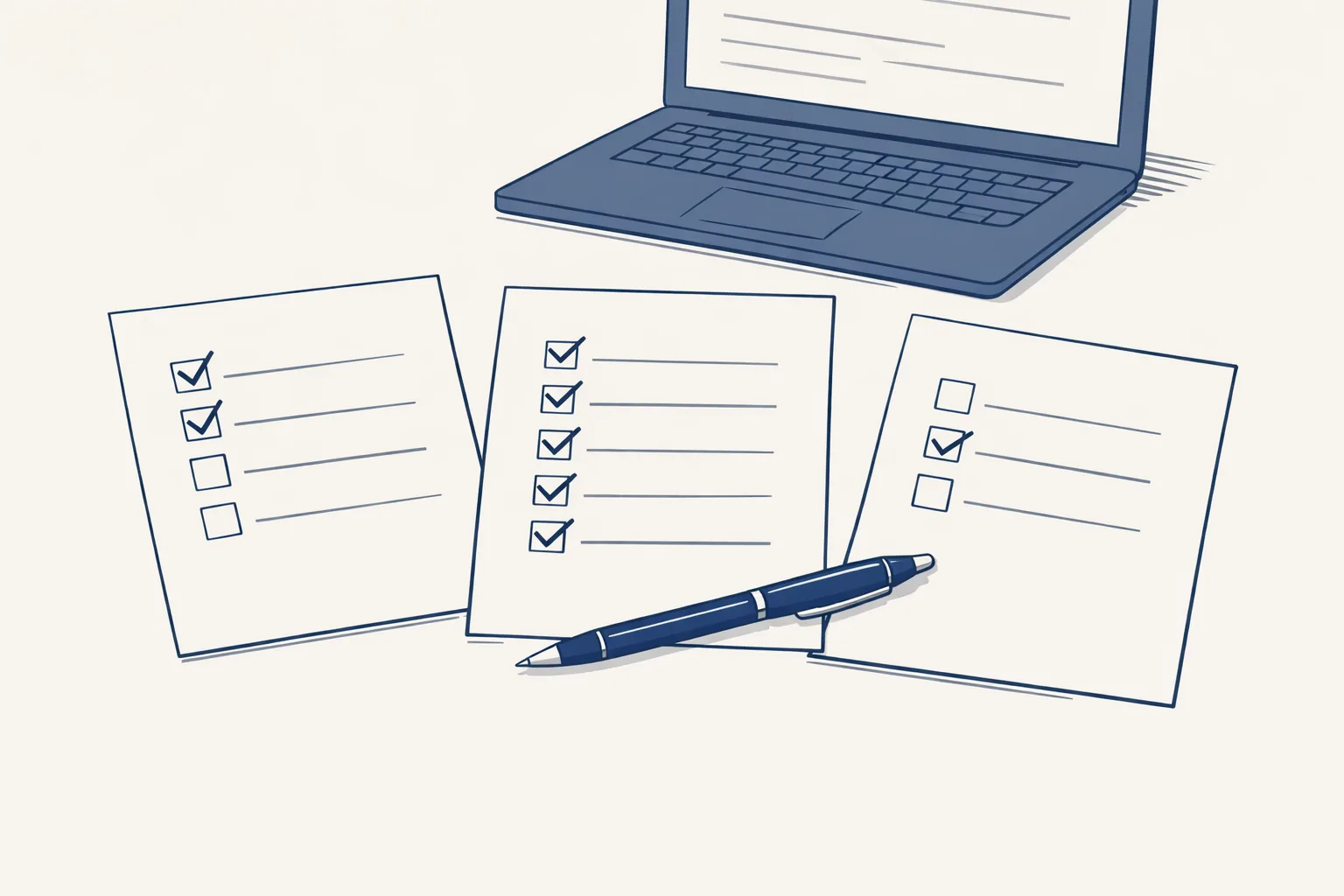
Tick each line that is true today. The result shows how much groundwork you already have.
How do we run a blog this way?
We run a blog this way today: a master sheet holds the plan, a robot publishes on the agreed dates, and each post goes through your read first.
Our own blog works like this. Each article is written in three languages with a picture and an interactive tool such as a checklist or a calculator. On its date, the robot publishes it, rebuilds the site and tells the search engines it is there. For a client, the same service is built around your topics and your voice.
We write for people first. Each article opens with a plain answer, uses one main phrase and shows a small everyday example. That also helps search engines and AI assistants understand it.
Because a blog is a long game, steadiness matters more than a big first month. Twelve good posts spread across a year beat forty rushed ones in a week.
Here is the set-up in order.
- You tell us about the business and the questions your customers ask.
- We build a list of topics and agree it with you.
- We write the first posts in your voice, in every language you need.
- You read them and say what to change.
- We put them in the calendar.
- The blog publishes on the dates, and we keep it going.
How do you judge whether it is working?
You judge it by simple things: posts go out on time, they sound like you, and people can find them.
A family shop owner checks three things each month. Did the posts go out? Do they read like her? Did anyone ask a question that came from a post? That is enough. Nobody can promise a place in search results, so we do not.
Watch for two warning signs. If you stop reading the posts, quality will drift. If every post starts to sound the same, add a fresh detail from the business to each one.
One more thing to decide early: what the blog is not. If you do not want to talk about prices, rivals or politics, say so once. The AI blogger will keep to it every time.
The checklist below shows how ready your blog is to be run this way.
Questions
What is an AI blogger?
A helper that plans, drafts, schedules and publishes blog posts. You supply the facts and read each post.
Can an AI blogger replace my writer?
It can take the routine drafting. A person who knows your business should still decide the topics and read the result.
Will an AI blogger get me to the top of Google?
No one can promise that. Clear, useful and regular posts give you a fair chance to be found.
Do you run company blogs?
Yes. We write and publish blogs in several languages, with pictures and interactive tools, on a calendar you agree.
Can the blog be in more than one language?
Yes. Each article is written in every language you need, as a native would write it.
Tell us your workflow. We will build it around you.
Tell us what your company would like to be known for. Write to [email protected] and we will show you how a blog could run.
Talk to us Related service: Website and content