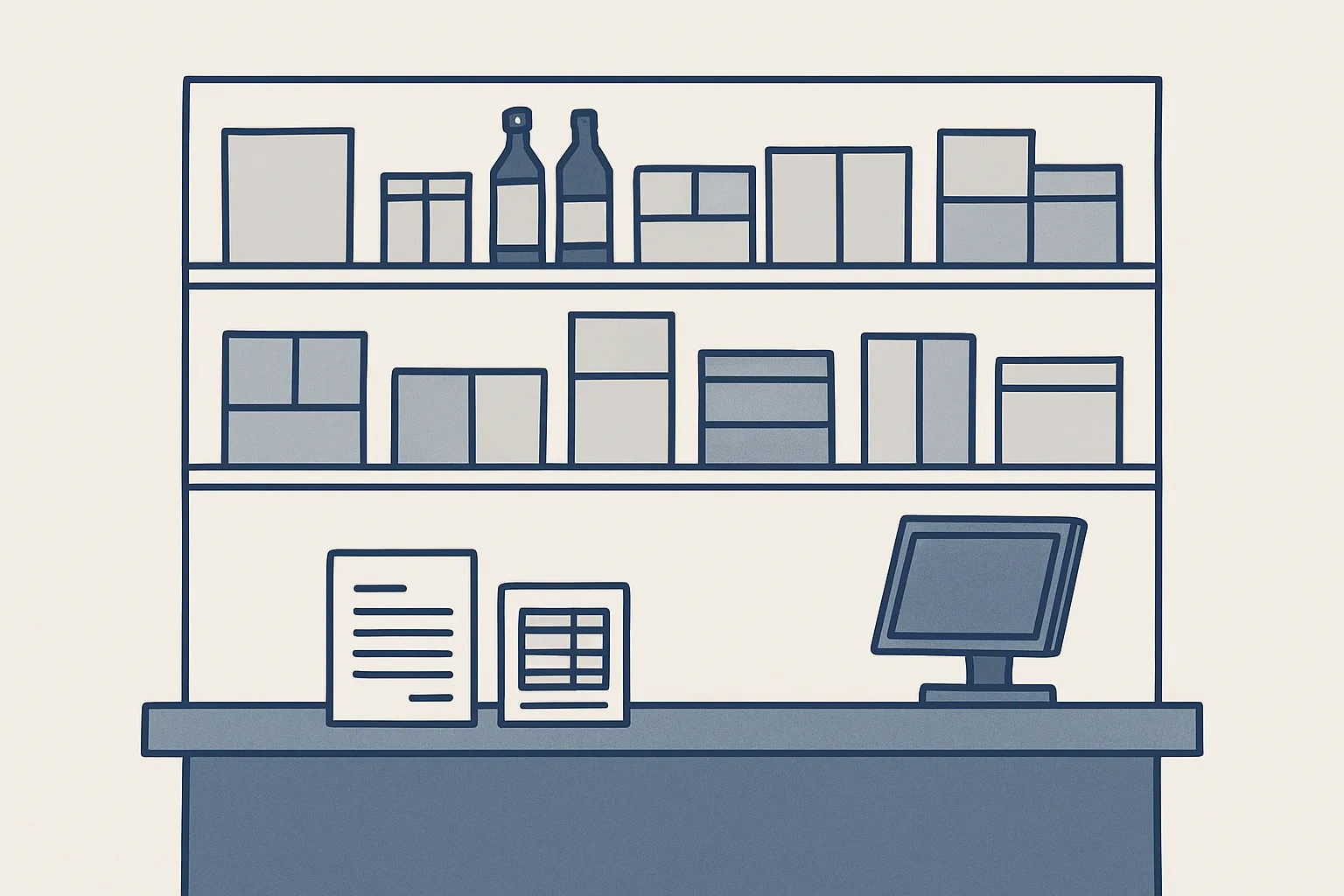
AI for retail stores works best behind the counter. It reads supplier invoices and enters them as draft bills, tracks what you pay for each product, checks deliveries against orders and prepares simple reports. You approve every bill and every order.
Where does AI for retail stores help first?
For a small shop, the most useful AI for retail stores works on the paperwork behind the counter, not on the shop floor.
The till knows what you sold. Everything else sits in the mailbox, on paper and in your head. Picture a gift shop owner on a Sunday evening with a pile of supplier invoices, a delivery note that doesn't match the order, and a stock count that never adds up.
That work repeats, and repeating work is exactly what an AI employee is good at. The same suppliers send the same kind of invoice every week. The robot does the reading, typing and filing. You still decide what to buy, what to pay and what to charge.
Your till and your point-of-sale system stay exactly as they are. Nothing on the shop floor changes, and your staff keep serving customers the way they do now.
How do supplier bills get entered?
Supplier invoices from your mailbox or a folder are read, entered as draft bills with the PDF attached, and filed under the supplier.
This is accounts payable automation, and it's running today for a client. Say a homeware wholesaler emails an invoice every Friday. Today someone types it into the accounts. With the robot, the draft bill is already waiting, with the PDF attached, when you sit down.
Paper invoices that arrive with a delivery can be scanned into the folder and follow the same route. Anything it can't enter exactly, like a refund or a supplier it has never seen, goes to a person instead of being guessed. A new supplier is added only after you say yes.
- A supplier invoice arrives by email, or a paper one is scanned into the folder.
- The robot reads the supplier, date, number, lines and totals.
- It checks the supplier is known and the totals add up.
- It creates a draft bill in your accounting system with the PDF attached.
- Anything unclear comes to you instead of being entered.
- You approve the bill and decide when to pay it.
Can it track what I pay for each product?
Yes. A purchase price history lists every product you've bought, with supplier, date and price per unit, built from your past invoices.
A small shop makes or loses its margin on buying prices. A supplier adds a few cents to the mugs, and the shelf price stays the same for months because nobody noticed. The history makes that visible. It's running today for a client: rebuilt from old invoices and kept current as new ones arrive.
This is price monitoring on the buying side only. It watches your own purchases, not other shops' websites, and it never changes your shelf prices. You get a list you can sort:
- Which products cost more since the last order.
- Which supplier is cheaper for the same item.
- Which products you haven't bought for a long time.
What about deliveries and stock?
A delivery register can show what you ordered, what arrived and what's in stock, using the documents you already get.
Many small shops have no stock management software, or have one they don't trust. The simpler way is to build the picture from documents: the order, the delivery note, the supplier invoice and what the till sold. One row per delivery, with those papers linked. This is offered and built to order.
Say a bakery supplier delivers ten bags of flour but the note says eight. The row shows the gap and passes it to a person. Then the invoice is checked against what actually arrived, not what was ordered.
It doesn't replace a stock count. It tells you where to look when the count is off.
Where should your shop start?
Tick each back-office job that takes real time in your shop today. The result suggests a first job to hand over.
Which reports can I get?
Once bills, prices and deliveries sit in registers, simple reports come almost for free, and the owner gets them as a short summary.
Once the registers are in place, you can answer your usual questions without a spreadsheet evening. Which supplier did we spend most with? Did that price go up? What never got delivered? Automated reports on your own tools are offered and built to order. They use your own data and stay in your own folders. Typical ones for a shop:
- Purchases by supplier this month and this year.
- Products whose buying price went up.
- Deliveries that didn't match the order.
- Products you haven't reordered in a long time.
- Supplier bills waiting for your approval.
What does it not do?
It doesn't run the till, serve customers, set prices or pay suppliers. It reads and files the paperwork and leaves the decisions to you.
It doesn't touch card payments and it doesn't change shelf or online prices. It doesn't place orders either. If you want order documents prepared, our purchase order robot, running today for a client, builds the order from one row in a sheet and prepares the email.
Think of it as a quiet helper in the back room. It does the typing and the filing, and you keep the decisions. Every action goes in a log, one command stops any robot, and nothing is switched on without your yes.
How do I get started?
Start with the back-office job that eats most of your evenings, usually supplier bills.
Before anything is built, put a month of supplier invoices in one place. Note which suppliers email theirs and which hand over paper, and who approves bills today. Many owners find invoices they'd forgotten about.
Our AI employees are rented monthly. We build and run them on our servers, against your own mailbox, sheets and accounting system. You pay one monthly figure per workflow, stated in the quote. If you stop, the workflow stops, and every bill and PDF is still in your own accounts.
The checklist below shows where a shop like yours might begin.
Questions
How can a small retail store use AI?
In the back office: supplier invoices entered as draft bills, buying prices tracked, deliveries checked against orders and simple reports. You approve every bill and order.
Does this replace my till?
No. The till stays as it is. This works on supplier papers, prices, deliveries and the accounts behind the counter.
Can AI watch supplier price changes?
Yes, on your own purchases. A history built from your invoices shows which products went up. It doesn't watch other shops or change your prices.
Do I need stock management software?
Not always. Many small shops get a useful stock picture from a register of orders, deliveries and sales built from papers they already have.
Will it pay my suppliers?
No. It prepares draft bills with the PDF attached. You decide when and how to pay.
Tell us your workflow. We will build it around you.
Tell us how many supplier invoices your shop handles each month and how long they take. Write to [email protected] and we'll say plainly whether it fits.
Talk to us Related service: Stock and shipments