AI writing is good at first drafts, tidying up, shortening and translating. It is poor at knowing your facts, your customers and what to leave out. Use it to save typing, and keep the checking and the final decision for yourself.
What is AI writing good at?
AI writing is good at turning rough notes into clean sentences, quickly and without getting tired.
Say a plumber jots down: "Burst pipe, sunday, kitchen, fixed in two hours, tenant very happy." AI can turn that into a neat job summary for the file, or a warm thank-you note to the tenant. The facts are his. The tidy wording comes free.
It is also a good partner when you are stuck. Ask for three ways to open an email and you will almost always find one you can use.
A second picture: a landscaper who hates writing quotes. She speaks a few lines into her phone about the job. AI turns them into a tidy, friendly message with the right headings. She changes two numbers, and it is done in minutes.
Here is where AI writing earns its keep.
- Turning notes into a first draft.
- Making a long text shorter, or a short one fuller.
- Fixing spelling, grammar and clumsy sentences.
- Changing the tone: friendlier, firmer or simpler.
- Translating a finished text into other languages.
- Writing the same message for different readers.
What is AI writing not good at?
AI writing is not good at facts, at judgment and at knowing who is reading.
Picture a small furniture maker who asks AI for a product page. The result says "handcrafted from solid oak". The tables are oak veneer. The writer has no way of knowing, so it guessed something that sounds nice. A customer who learns the truth does not come back.
It also cannot tell what to leave out. A good writer knows that a customer reading about a tax bill does not want a joke. A tool will happily add one.
And it does not know your story. The small details that make people trust you, the year you started, the regular who has come every Friday, only come from you.
Here is a simple split.
| Good for AI | Better kept in human hands | |
|---|---|---|
| Facts | Writing them nicely once you supply them | Knowing which ones are true |
| Tone | Trying several versions | Choosing the one that sounds like you |
| Length | Cutting and expanding | Deciding what matters most |
| Promises | Phrasing | Deciding what you can stand behind |
| Sensitive messages | A rough start | Complaints, bad news, anything personal |
How do you give AI writing the right facts?
You give it the right facts by writing them down first, in plain notes, and asking it to use only those.
A cafe owner wants a post about a new menu. She types the dishes, the prices she is happy to share, the opening days and one line about why. She asks: "Write a short friendly post using only these facts." That one instruction keeps the draft honest.
Without it, AI fills gaps with plausible words. Plausible is not the same as true.
A short checklist for every request: who is reading, what must be true, what must be left out, and how long it should be. Four lines of notes beat a long clever prompt.
One more habit saves a lot of trouble: tell it what not to do. "No claims about speed. No made-up reviews. No names." A clear no is as useful as a clear yes.
Which of your writing jobs suit AI?
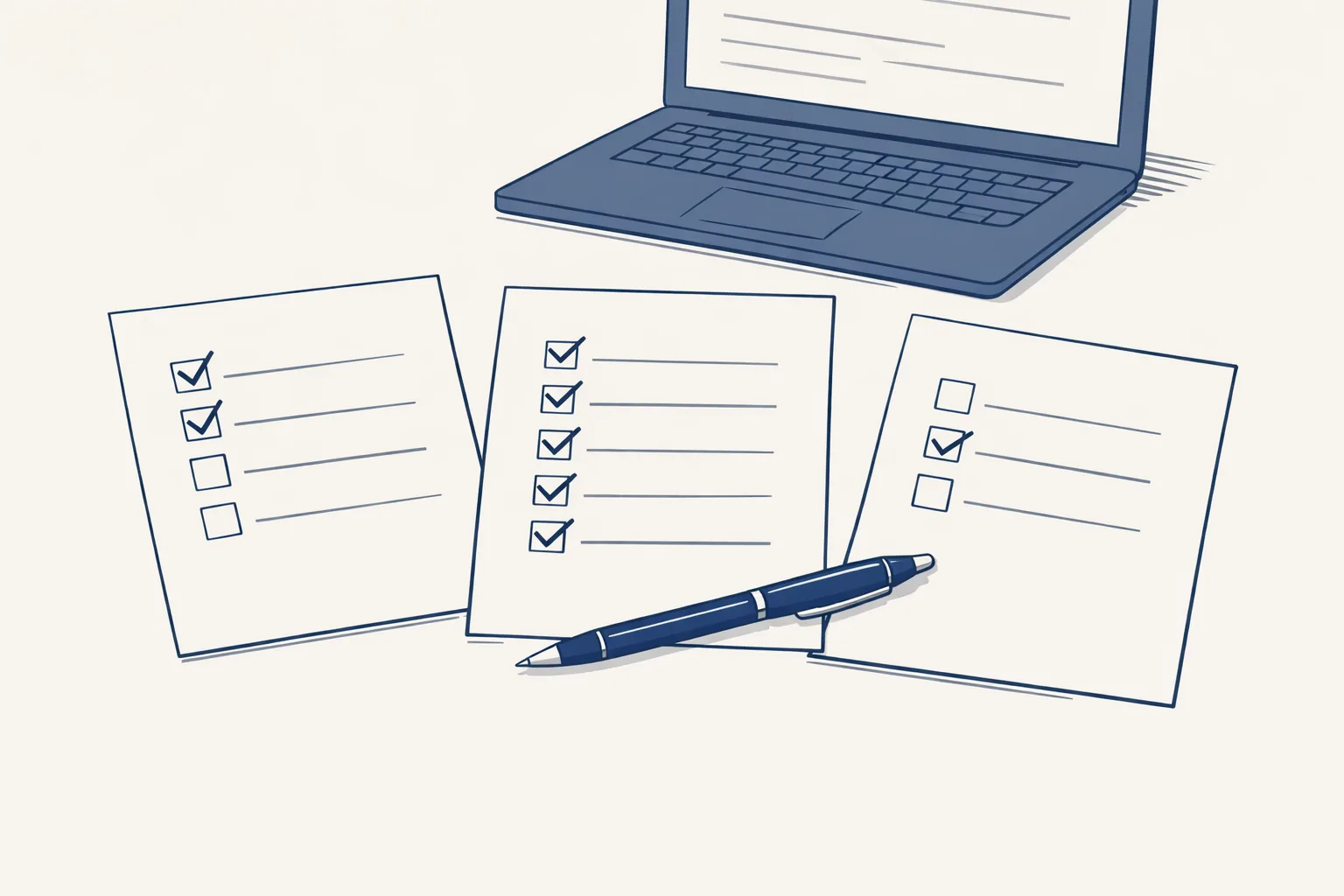
Tick every job that fills your week. Each item here suits a first draft from AI that you then read and fix.
How do you check what AI writes?
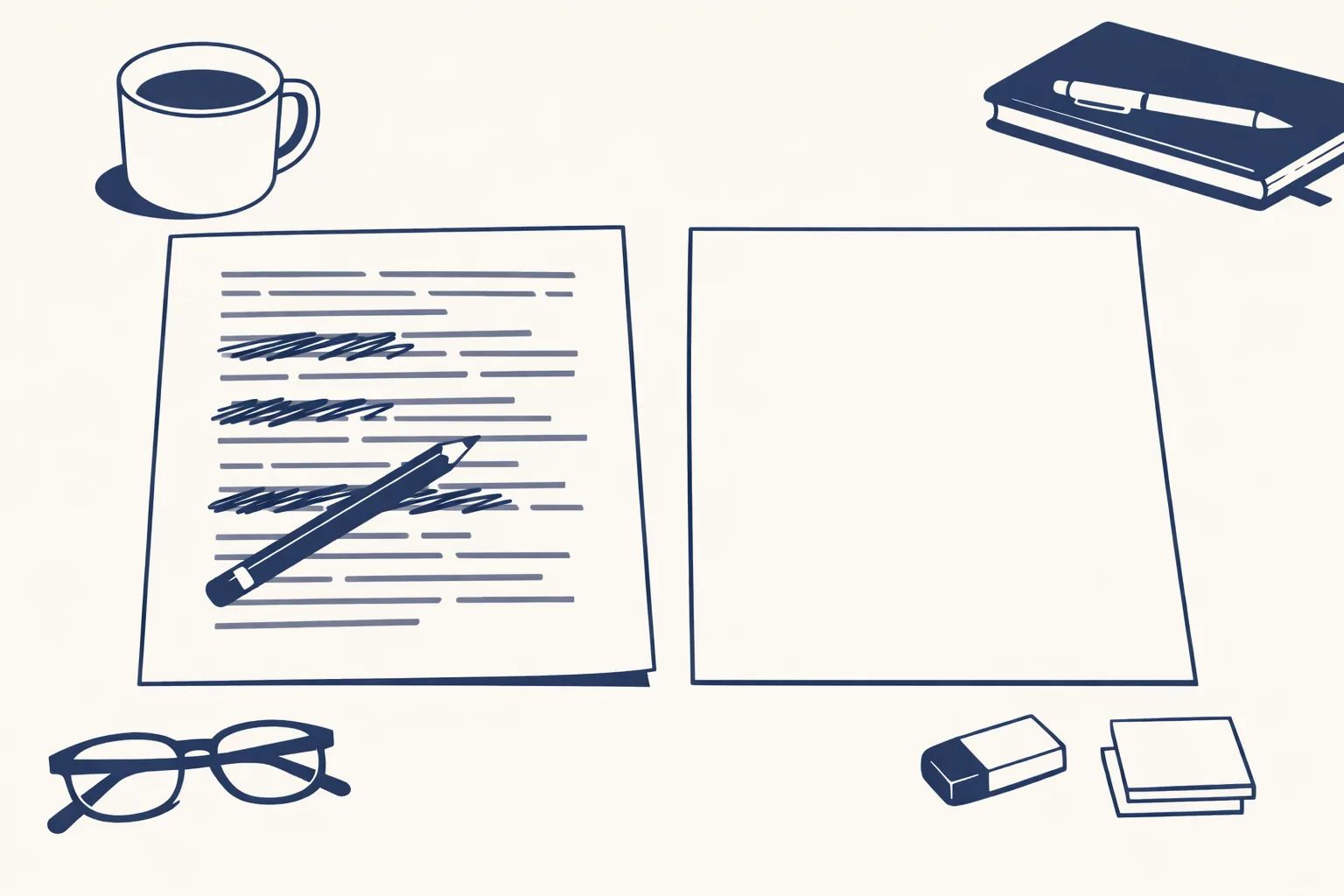
Check it by reading it slowly, line by line, against what you know to be true.
Imagine an accountant's office sending a client a reminder. AI writes it well, but says the deadline is the thirtieth. The deadline is the thirty-first. One wrong day in a polite email is still a wrong day.
Read it aloud. If a sentence sounds like nobody you know, change it. Check every date, name, price and promise. Take out anything that sounds grand but says nothing.
We read before we publish, on our own pages and for clients. Our writing runs today as part of building multi-language websites and a three-language blog, and you read every page before it goes live. That read-through is the real quality control.
Reading takes practice. At first you will find a lot to fix. After a few weeks you will know the mistakes your helper tends to make, and your eye will go straight to them.
A short routine you can follow:
- Write your notes: the facts, the reader and the goal.
- Ask for a first draft using only those facts.
- Read it slowly and mark anything you cannot stand behind.
- Fix the facts, then fix the tone.
- Read it aloud once more.
- Publish only when you would be happy to say it to the customer's face.
How do you start using AI writing in your business?
Start with one small, low-risk job, such as thank-you emails or social captions, and see how much time it saves.
A bakery could begin with captions for photos of the daily bread. If one is slightly off, nothing bad happens. Once that feels comfortable, move on to product descriptions, then longer pieces.
Keep the risky writing for later: legal wording, anything about prices, health or safety, and messages to unhappy customers. Those deserve a human from the first word.
A small test before you trust any new use: do it both ways once. Write one email yourself and have AI draft the same one. Compare the time and the quality. The answer is usually clear within a day.
The checklist below shows which of your writing jobs suit AI best. Tick the ones that happen often in your week.
Questions
What is AI writing?
Using AI to draft, tidy, shorten or translate text. You give it your notes and facts, and you check the result.
Can AI write my business emails?
It can draft them well from your notes. Read each one before it goes out, especially dates, prices and promises.
Is AI writing accurate?
Not always. It can sound sure while being wrong, so check every fact against what you know.
Will AI writing sound like me?
Only if you give it your own words and edit the result. Left alone, it sounds like everyone.
Do you offer AI writing?
We write and publish multi-language websites and blogs for clients. You read every page before it goes live.
Tell us your workflow. We will build it around you.
Tell us which writing jobs eat your week. Write to [email protected] and we will say plainly what fits.
Talk to us Related service: Website and content