Conversational AI is software that talks with people in everyday language, by chat, email or voice. It reads what a person writes or says, works out what they want, and answers in plain words. For most small businesses, email is the calmest place to start.
What is conversational AI?
Conversational AI is software that understands everyday language and replies in the same way, so a person can just talk or type as they normally would.
Say a customer writes to a bakery: 'Can I change my cake order to Saturday?' The software reads that, sees it is about changing a date, and can write back. The customer never has to pick from a menu or fill in a form.
Behind every good example is a simple rule: the software should help the person, not hide behind a clever voice. If a reply would embarrass you when read aloud, it isn't ready to send.
It isn't one product. It's an idea used in chat boxes on websites, in email helpers and in phone systems that answer calls. What they share is the ability to read or hear ordinary words and respond in ordinary words.
Older systems used fixed menus and keywords. Today's conversational AI copes with the many ways people ask for the same thing.
How does it work in chat?
In chat, conversational AI answers a visitor's questions inside a box on your website or app, one message at a time.
Picture an online shop with a chat box in the corner. A visitor types: 'Where is my parcel?' The helper looks up the order and replies at once.
Chat is quick, and that is both its strength and its risk. A fast wrong answer reaches the customer before anyone has read it. A chat helper needs firm limits: what it may say, what it may promise and when it should hand over to a person.
We don't build chatbots for websites. If chat is what you need, ask any seller how it handles a question it can't answer.
How does it work in email?
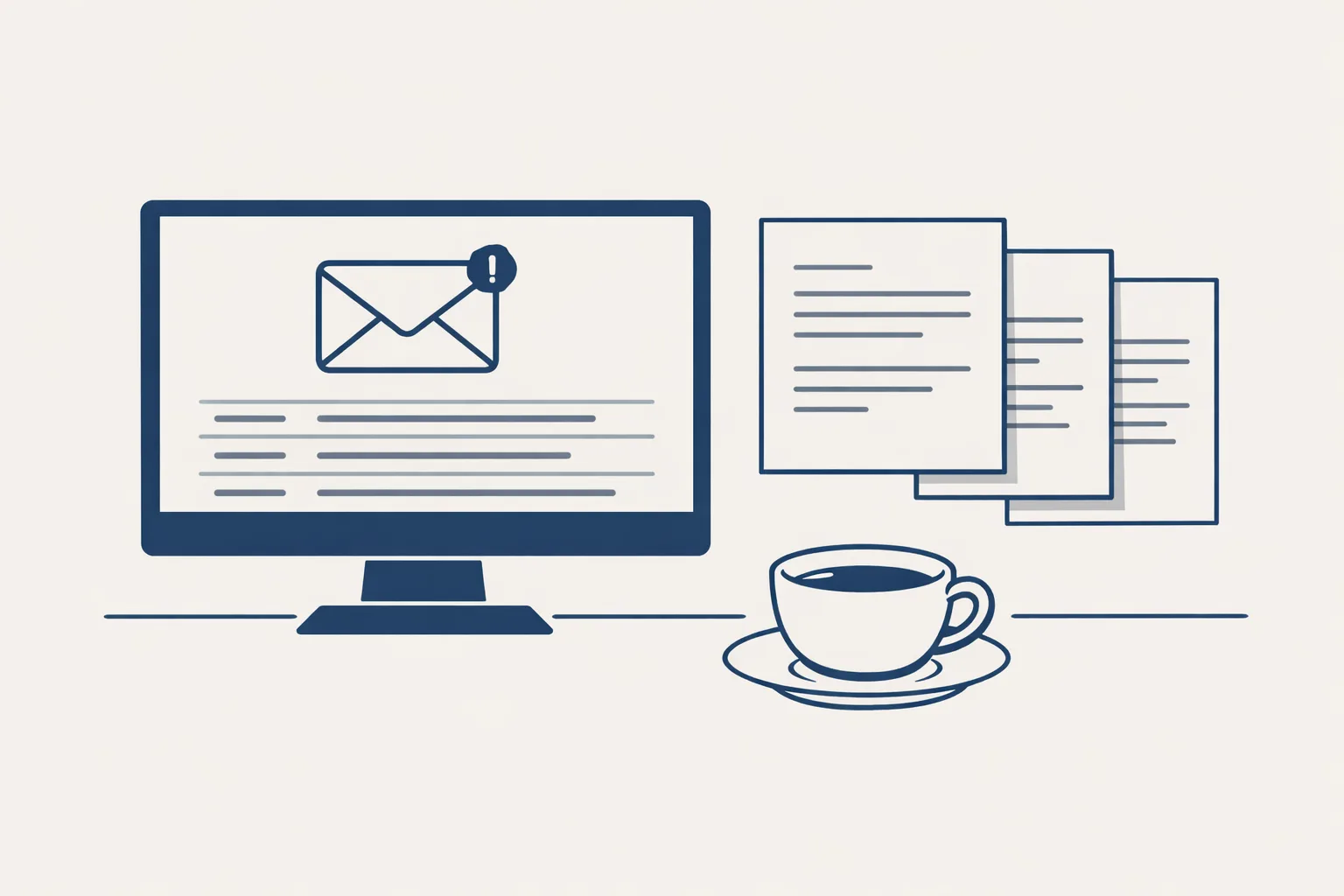
In email, conversational AI reads each incoming message, works out what it is about and writes a draft reply for someone to check.
A small wholesaler gets the same questions every week: price lists, delivery dates, copies of invoices. A helper can sort those emails, find the answer in the wholesaler's own past replies and documents, and leave a draft in the mailbox. The owner reads it, changes a word if needed and sends it.
A calm mailbox also keeps a record. You can look back at what was asked, what was drafted and what you sent. That record is useful the day a customer says, 'But you told me something different.'
Email is calmer than chat. Nobody expects an instant answer, so there's time to read before anything goes out. That makes it a gentle first step.
Drafted customer replies are something we build to order. They work inside Gmail and Google Workspace, and they're written from your own past answers. Nothing answers a customer by itself.
Here is what a good email helper does:
- Sorts incoming mail by type, such as price, delivery or complaint.
- Writes a draft in your voice, from your past replies.
- Leaves complaints and odd cases for you to handle yourself.
- Keeps the draft next to the original email.
- Lets you edit freely before anything is sent.
How much time do customer messages take?
Type in your own numbers. The result is the time you spend answering customers today, by your own count. It is not a promise of what conversational AI would save.
How does it work on the phone?
On the phone, conversational AI listens to a caller, understands the words and answers out loud.
Imagine a dentist's surgery with a phone system that answers calls and offers appointment times. Callers speak normally and the system replies in a voice.
Phone is the hardest channel. People interrupt, mumble, have accents and call from noisy streets. A wrong answer is spoken aloud and can't be taken back. Recording calls also brings legal rules that differ from place to place.
We don't run phone or voice agents. If you're weighing one, test it with your noisiest and most upset callers, not the easy ones.
Which channel should you start with?
Start with the channel where a mistake is easiest to catch before it reaches the customer, which for most businesses is email.
Think of a family-run firm that wants help with customer messages. Chat shows answers instantly, so a mistake is public at once. Phone is spoken and live. Email gives you a draft to read first.
Whatever you pick, start with a small slice. One kind of question, one channel, a few weeks. Then look at the results with a cool head before you widen anything.
Here's a simple way to choose:
- List where your customers contact you today.
- Count roughly how many messages arrive in each place.
- Note which questions repeat.
- Pick the channel with the most repeats and the lowest risk.
- Start with drafts that a person reads, then widen later.
What can go wrong, and how do you stay safe?
The main risk is a confident wrong answer, so keep a person between the AI and your customer until you trust it.
Say a helper tells a customer a refund is due when it isn't. That's a promise your business now has to deal with. A draft that you read first would have caught it.
Ask three questions of any conversational AI: what is it allowed to say, how do I see what it said, and how do I stop it quickly? If the answers are vague, wait.
The calculator below shows how much time customer messages take you today. It uses only your own numbers.
Questions
What is conversational AI?
It is software that understands everyday language and replies in the same way, by chat, email or voice.
What is the difference between conversational AI and a chatbot?
A chatbot is one kind of conversational AI, usually a box on a website. Conversational AI also covers email helpers and voice systems.
Is conversational AI good for small businesses?
It can be, especially for repeat questions. Start where a mistake is easy to catch, such as email drafts.
Do you build chatbots or phone agents?
No. We build drafted customer replies for email, made to order. We don't run website chat or phone agents.
Can conversational AI replace my customer service team?
No. It takes the repeat questions off the desk so your people can spend time on the ones that need a person.
Tell us your workflow. We will build it around you.
Tell us which customer questions repeat most. Write to hello@thenewaiemployee.com and we'll say honestly whether email drafts would help.
Talk to us Related service: Services