An AI agent platform is a service where you build, run and watch AI helpers that do jobs for you. Before you buy, compare how much control you keep, what it really costs as the work grows, and what happens when it gets something wrong.
What is an AI agent platform?
An AI agent platform is a service that gives you one place to build AI helpers, connect them to your tools and watch what they do.
Say you run a small trading company. You want a helper to sort your enquiries, another to draft replies and a third to file documents. A platform holds all three, with the logins, the settings and a screen showing what each one did today.
Think of it like a workshop with benches. The platform gives you the benches and the tools. You still have to know what you want to make.
Say a plumber's office wants one helper for incoming enquiries. A platform lets them set that up without hiring a developer, as long as the job is simple.
Some platforms suit people who like to build. Others are made for developers. Some come with ready-made helpers for common jobs. Knowing which kind you're looking at saves a lot of time.
What should you compare first?
Compare first what the platform does when something goes wrong, because every helper makes mistakes sooner or later.
Picture a wholesaler whose helper reads a supplier bill and misreads a number. On a good platform, the odd case stops and waits for a person. On a weak one, the wrong number goes straight into the accounts, and you find it at month-end.
Ask to see this with a messy example, not a clean demo. The way a platform handles a bad case tells you more than any feature list.
If a seller can't show a mistake being caught in plain view, treat that as your answer. A platform that hides its errors will hide yours too.
Look for these basics:
- It stops and asks when it is unsure, instead of guessing.
- It keeps a record of every action.
- You can pause or switch off a helper fast.
- A person can read the work before it leaves your business.
- You can see who changed what, and when.
How do you judge the real cost?
Judge the real cost by adding up the price at your own volume, plus the time it takes you to set up and look after it.
A bakery that sends a few emails a day will pay little on a plan priced per task. A busy online shop with hundreds of orders a day may find the same plan expensive. Work out your own numbers before you compare prices.
Ask for a worked example with your own numbers. A seller who can't give you one probably hasn't thought about your size of business.
Hidden costs are the ones that catch people out. Ask about:
- Prices per task, per message or per seat, and what happens when you go over.
- Extra charges for the connections to your tools.
- Fees for storing records.
- The time your team spends setting up and fixing.
- What it costs to leave, and whether you can take your data.
Have you asked the platform these questions?
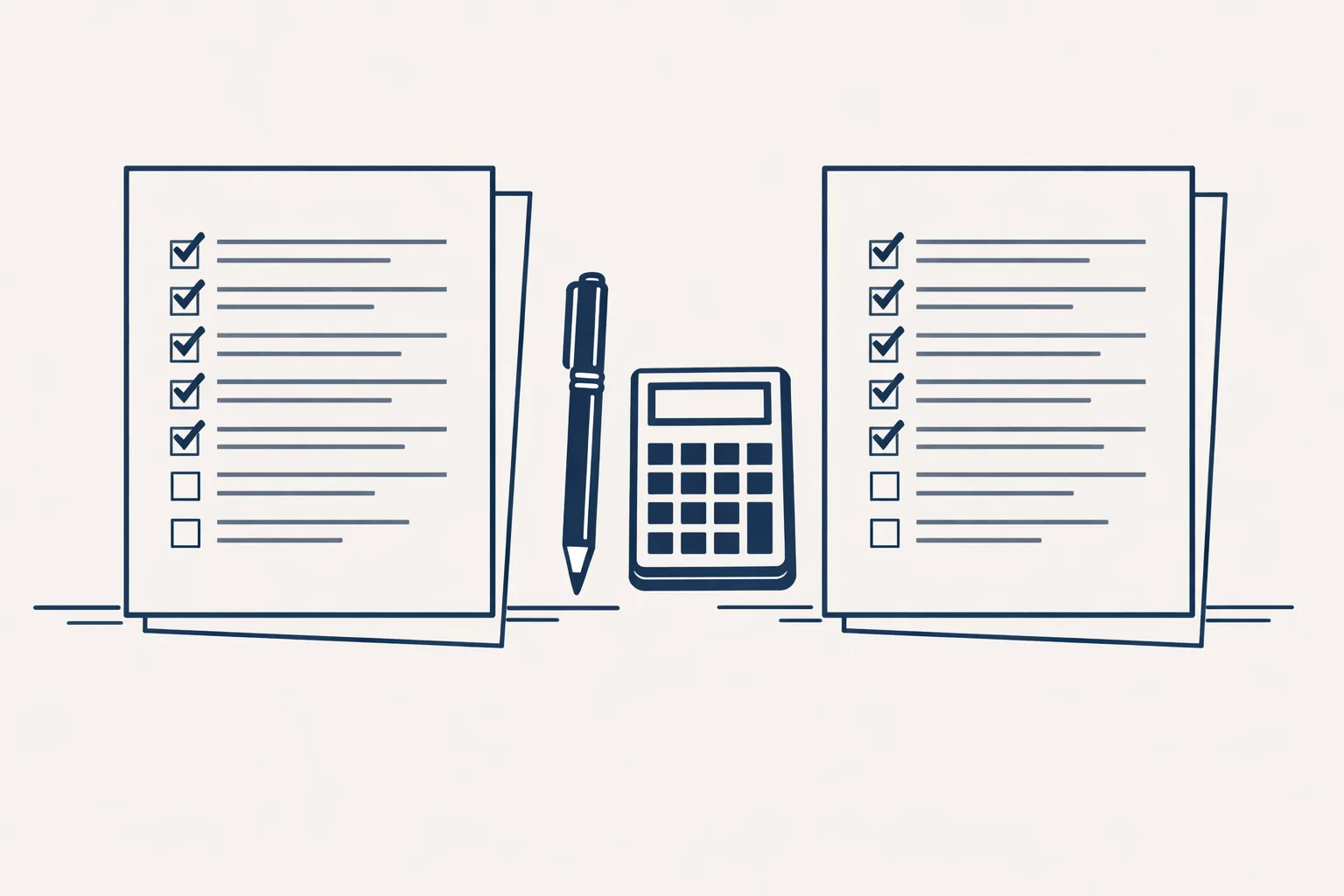
Tick each question you've asked and got a clear answer to. Unticked boxes are things to ask before you pay.
Will it work with the tools you already use?
It's worth checking early that the platform can reach the tools you use every day, and do so safely.
Say your office lives in Gmail, Google Sheets and an accounting system. A platform that can't reach all three leaves you copying and pasting by hand, which is the very thing you wanted to stop.
Ask how it logs in to your accounts, who can see the logins, and what it is allowed to do once inside. A good platform asks for only the access the job needs. A weak one asks for everything.
Then try one real connection with a test account before you commit.
A short call with a seller is not a test. A week with your own data is.
Is a platform what you need, or a person to build it?
A platform suits people who want to build and look after their own helpers. If you'd rather hand the whole job over, you may need someone to build it.
A family firm with no spare time to learn a new tool might spend months on a platform and still have nothing running. The right choice depends on how much of the work you want to own.
Be honest about your own time, too. If nobody on your team will look after a platform once the first excitement fades, a tool you must maintain will slowly be left alone.
We are not a platform. We build AI employees to fit your business, run them on our servers and look after them. They work inside the tools you already use, today Gmail, Google Drive, Google Sheets and Xero. Sales invoicing and supplier bills run today for clients. Other jobs, such as drafted customer replies, are built to order. You check the work and decide when a step goes automatic.
How do you test a platform before you commit?
Test it with one real job, on copies, for a short time, and write down what you find.
Say you're an accountant's office choosing between two platforms. Give both the same small job, such as sorting a week of client emails. Compare the results side by side.
Write the results in a small table: what each platform did well, what it got wrong and how much effort it took. A simple table beats a vague memory a month from now.
A short plan:
- Pick one real job with a clear end.
- Write down what a good result looks like.
- Run the job on copies on each platform.
- Feed in one or two messy cases on purpose.
- Compare the results, the effort and the records.
- Ask each seller how they handle a mistake, then decide.
Questions
What is the best AI agent platform?
There isn't one best. It depends on your job, your tools and how much you want to build yourself.
How much does an AI agent platform cost?
Prices vary a lot and often grow with use. Work out the cost at your own volume, not the starting price.
Do I need a developer to use an AI agent platform?
Not always. Some are made for non-technical people, others are not. Ask for a trial on your own job.
Is an AI agent platform safe for business data?
It depends on the platform. Ask who can read your data, how logins are stored and whether you can delete everything.
Do you sell an AI agent platform?
No. We build AI employees for your business, run them on our servers and look after them.
Tell us your workflow. We will build it around you.
Tell us the job you're comparing platforms for. Write to hello@thenewaiemployee.com and we'll tell you honestly whether you need one.
Talk to us Related service: Services