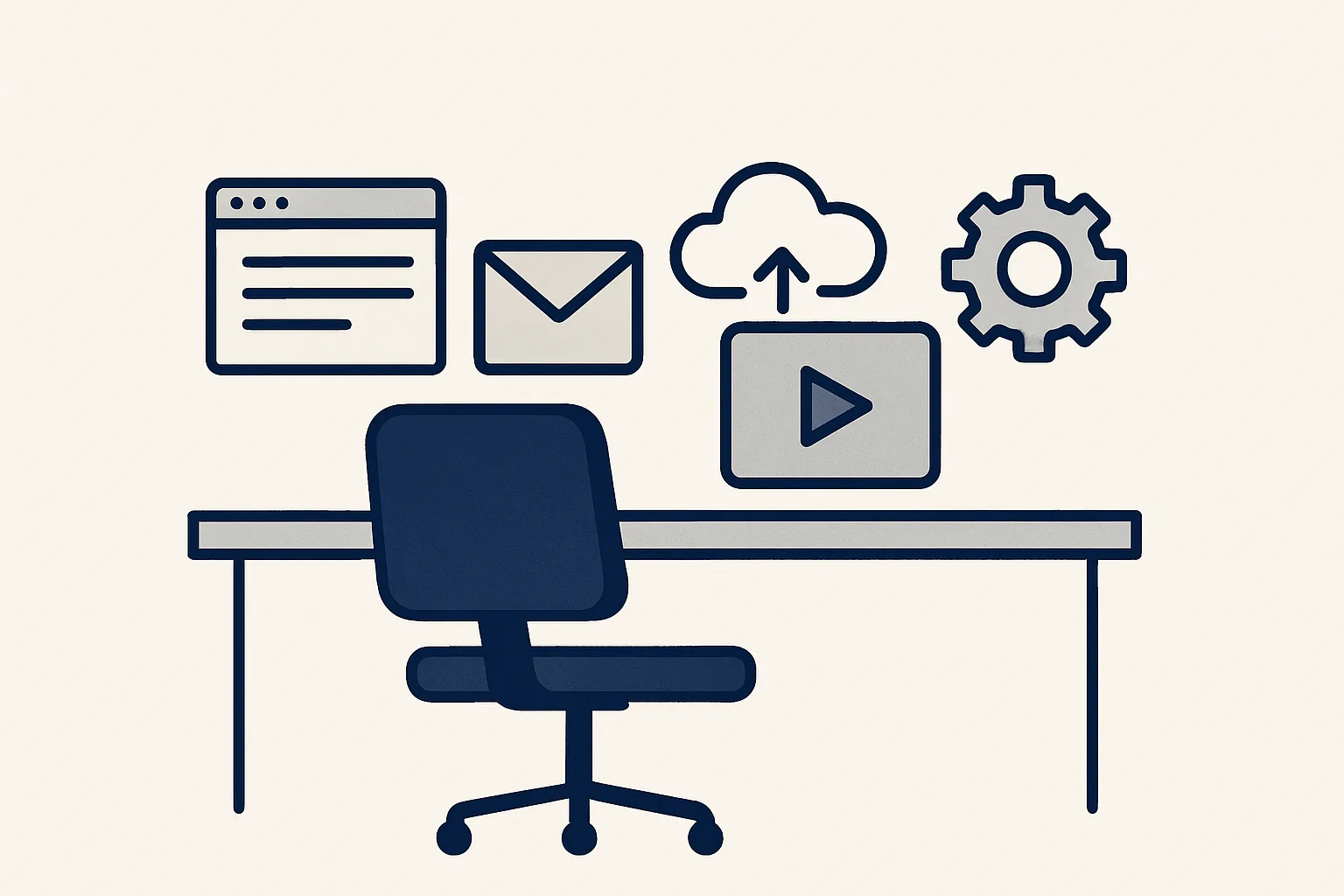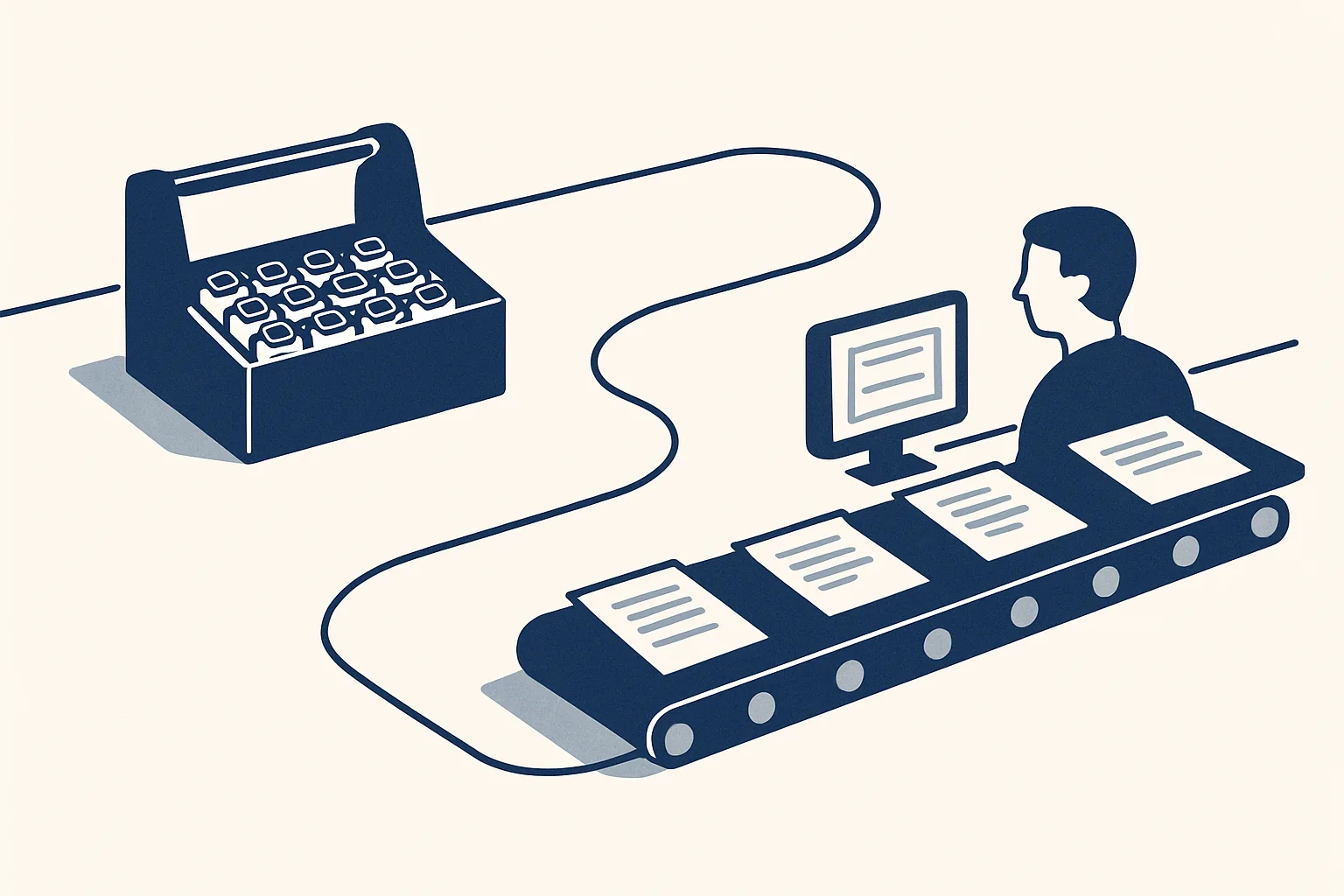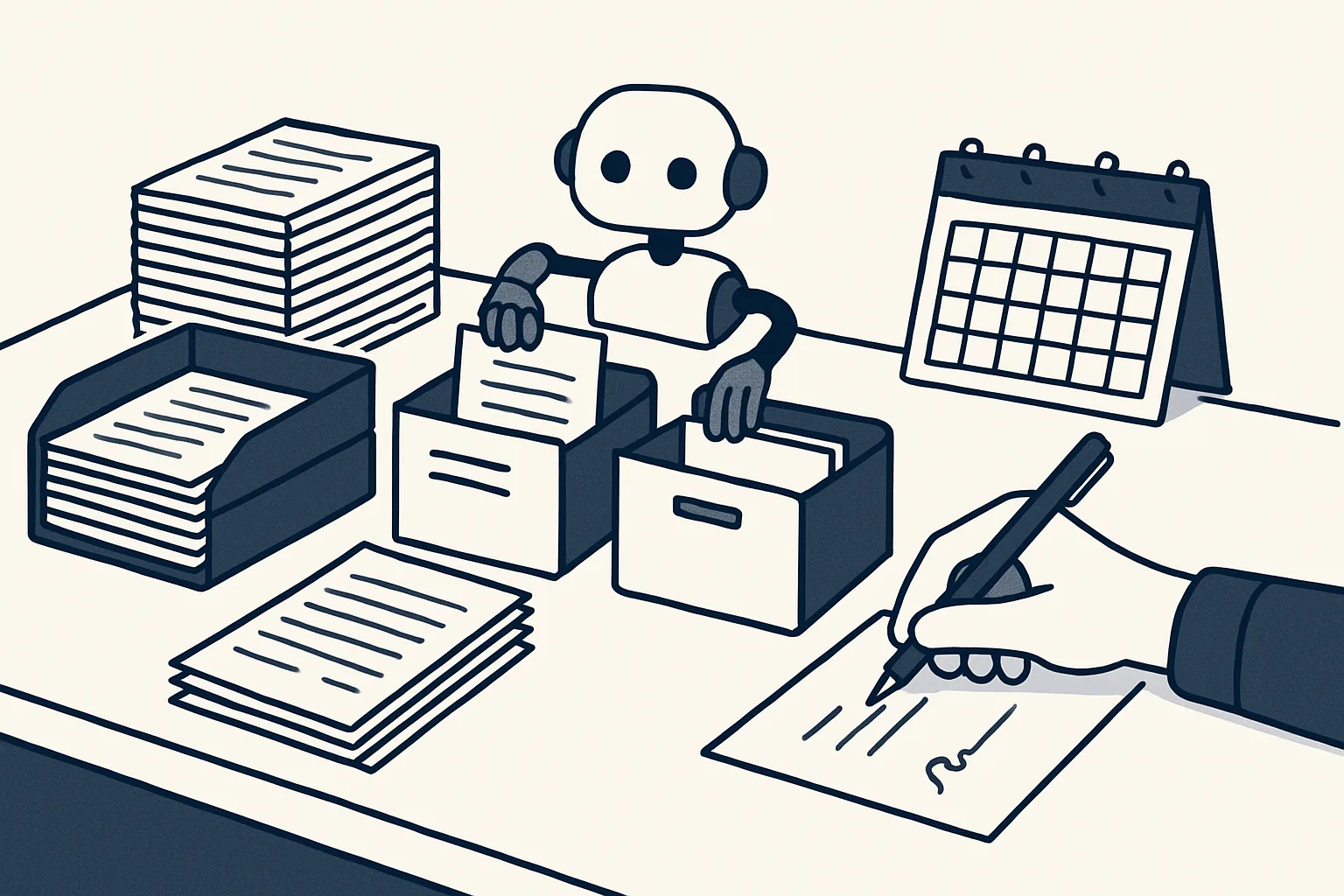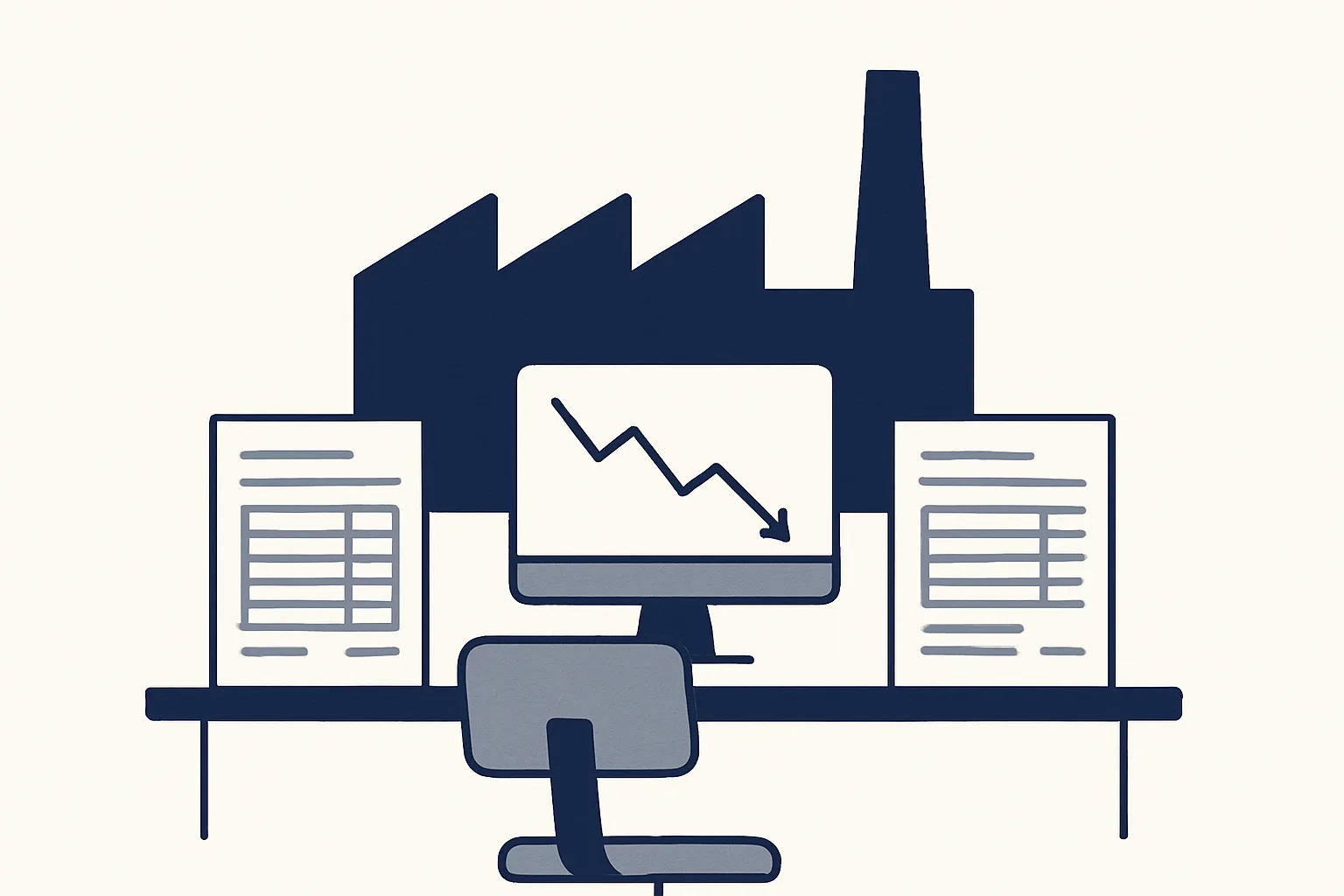
Most talk of AI for manufacturing is about the shop floor, but much of the effort sits in the office: purchase orders, supplier bills, price history, delivery documents and customer orders. AI can read and draft that paperwork so people check and approve rather than retype.
The office behind the factory
AI for manufacturing usually means machines and sensors, but some of the most repetitive work in a manufacturing business happens at a desk.
Every order that passes through a plant leaves a trail of paper. A customer order comes in. Materials are bought with purchase orders. Suppliers confirm, deliver and invoice. Delivery notes and quality documents arrive with the goods. Your own delivery note goes out with the finished product, and a sales invoice follows. At each step, someone reads one document and types the same details into another.
This article is about that office. It does not cover production planning, machine monitoring, predictive maintenance or quality inspection on the line; those are different problems with different tools. What it covers is the paperwork that turns an order into an invoice, and where AI can draft it so people check instead of retyping.
Why does this side of AI for manufacturing get so little attention? Partly because it is less visible: nobody photographs a purchase order. But the office is where a missed price change, a credit note entered as an invoice or a delivery note that cannot be found turns into a cost, and it is where the same few people are interrupted all day.
The table follows a typical chain and says what is running today and what is offered, built to order.
| Document | What AI can do | Status |
|---|---|---|
| Purchase order to a supplier | Render the PDF from one sheet row, file it, draft the email | Running today |
| Supplier invoice and credit note | Read it, draft the bill with the PDF, file it under the supplier | Running today |
| Price paid and charged | Keep a register of every line bought and sold, with its unit price | Running today |
| Customer emails | List yesterday's new and unanswered mail each morning | Running today |
| Sales invoice | Build the draft from the order row, file the PDF, draft the email | Running today |
| Delivery notes and quality documents | Link each document to one row per truck or container | Offered, built to order |
| Customer enquiries | Log each one and draft the first reply and follow-ups | Offered, built to order |
Purchase orders and supplier bills
Purchase order automation turns one row in a sheet into a finished purchase order, and accounts payable automation turns the supplier's invoice into a draft bill.
Buying is where the office repeats itself most, which makes it the natural first job for AI for manufacturing back offices. The same materials are ordered from the same suppliers, on the same terms, again and again. Yet each purchase order is often written from scratch or copied from the last one, and each supplier invoice is typed into the accounting system by hand when it arrives.
The supplier's invoice closes the loop. Accounts payable automation, also running today for a client, reads supplier invoices and credit notes from the mailbox and a drop folder, creates the draft bill in the accounting system with the PDF attached and files the PDF under the supplier. Refunds, unknown suppliers and anything it cannot enter exactly go to a person instead of being guessed, and a new supplier is created only after the owner approves it.
Purchase order automation, as it runs today for a client, works like this:
- A buyer fills in one row in a sheet: the supplier, the materials, the quantities, the price and the delivery terms.
- The buyer confirms the row twice, so nothing is built by accident.
- The robot renders the purchase order PDF from your own template.
- It files the PDF in the supplier's folder.
- It prepares a draft email to the supplier with the PDF attached, and a message in the client app saying the order is ready to check.
- A person reads the draft and sends it. Nothing is sent by a robot.
Price history for materials
A price history tracker records every line you have bought and sold with its unit price, so the next order or quote starts from the last real price.
In manufacturing, material prices move, and the memory of what was paid last time usually lives in a buyer's head or in a pile of old invoices. When the buyer is away, or when a quote has to go out today, someone digs through the archive. A price register is one of the simplest uses of AI for manufacturing offices, and it removes the digging.
Ours is rebuilt from past invoices, both purchase and sales, and kept up to date automatically as new invoices arrive. It is running today for a client. Each line holds the product, the supplier or customer, the date, the quantity and the price per unit, so it answers questions like these:
- What did we pay this supplier for this material last time, and the time before?
- What did we charge this customer for this product, and when?
- Has a supplier's price for the same item moved since the last order?
- Which supplier gave us the lowest unit price on this item over the past year?
- What price should this quote start from?
Where does your order-to-invoice chain retype data?
Follow one order from start to finish. Tick each step where someone types details that already exist in another document.
Delivery and quality documents
Delivery notes and quality documents can be linked to one register row per shipment, which then also shows where the stock stands.
Goods arrive with paper: a delivery note, a packing list, sometimes a material or quality certificate from the mill or the maker. Goods leave with your own delivery note. In many offices these documents are filed by hand, or kept on paper, and finding the right one for a customer query or an audit means a search through folders.
A stock and shipment register puts one row per truck or container, with every document for that load linked to it. The same register, read the other way, is the stock position: what came in, what went out, what is still here. This part of AI for manufacturing is offered and built to order; it is not running today. As with everything we build, a person checks what the robot linked, and anything it cannot match exactly comes back to a person.
Customer orders to invoices
With AI for manufacturing paperwork, sales invoices are built from the order you already hold, so the details are typed once, not again at invoicing time.
The invoicing robot runs today for a client. A sheet remembers your customers and products. When an order is ready to invoice, a person fills one row, a ready check confirms nothing is missing, and two confirmations start the build. The robot renders the PDF from your template, files it in the customer's folder, creates a draft invoice in your accounting system with the PDF attached and prepares a draft email beside it. A person checks both and sends.
Tax wording is applied at creation by rules your accountant gives us, so an export sale and a domestic sale each carry the right wording without anyone remembering it. This is not tax advice; check with your adviser which rules apply.
Customer email is the other half of this step. The daily mail digest, running today, lists every morning the previous day's new and unanswered emails across several mailboxes, each with a short gist, so an order or a complaint does not sit unread. Draft replies to customers are offered and built to order.
Where to start
Start with the step in your order-to-invoice chain where the same details are retyped most often.
Map your own chain with the self-check on this page. For most manufacturers, the answer is purchase orders or supplier bills, because buying repeats so often, or the sales invoice, because it copies the order. Pick one, count how many documents it involves each month and how long each takes by hand. That figure in hours is the measure we work to.
Our robots are rented monthly. We build them, run them on our servers and look after them; they work against your own mailbox, folders, sheets and accounting system, and your data stays in your accounts. The price is one monthly figure per workflow, stated in the quote. A kill switch stops any robot in one command, and nothing is switched on without your yes.
AI for manufacturing on the shop floor may get the headlines. In the office, the gain is quieter: fewer details typed twice, documents found where they should be, and people spending their time checking and deciding instead of copying.
Questions
How is AI used in manufacturing?
On the shop floor it is used for things like monitoring machines and inspecting products. In the office, it reads and drafts paperwork: purchase orders, supplier bills, price records, delivery documents and invoices, for people to check.
What is purchase order automation?
A purchase order is built from one row in a sheet: the robot renders the PDF from your template, files it and prepares a draft email to the supplier. A person checks it and sends it.
Can AI track material prices?
It can keep a register of every line you bought and sold, with its unit price, rebuilt from past invoices and updated as new ones arrive, so orders and quotes start from the last real price.
Does this include production planning or maintenance?
No. Everything described here is office work. Production planning, machine monitoring, predictive maintenance and quality inspection on the line are not part of what we build.
Do I need a new system?
No. Our robots work against your own mailbox, folders, sheets and accounting system. We build and run them on our servers, rented monthly, and your data stays in your accounts.
Want hours back from this work?
Write to [email protected] with the step in your order-to-invoice chain that takes the most hours each month, and we will tell you plainly whether we can draft it for you.
Talk to us Related service: Sales desk and orders