Accountants use AI for accountants best on the routine that comes before judgment: reading client invoices and receipts into draft entries, suggesting bank matches, chasing missing documents and filing everything the same way. Review, advice and sign-off stay with the accountant.
Where accountants lose hours
Accountants lose most hours on the routine before the real work: collecting, reading, typing, matching and chasing.
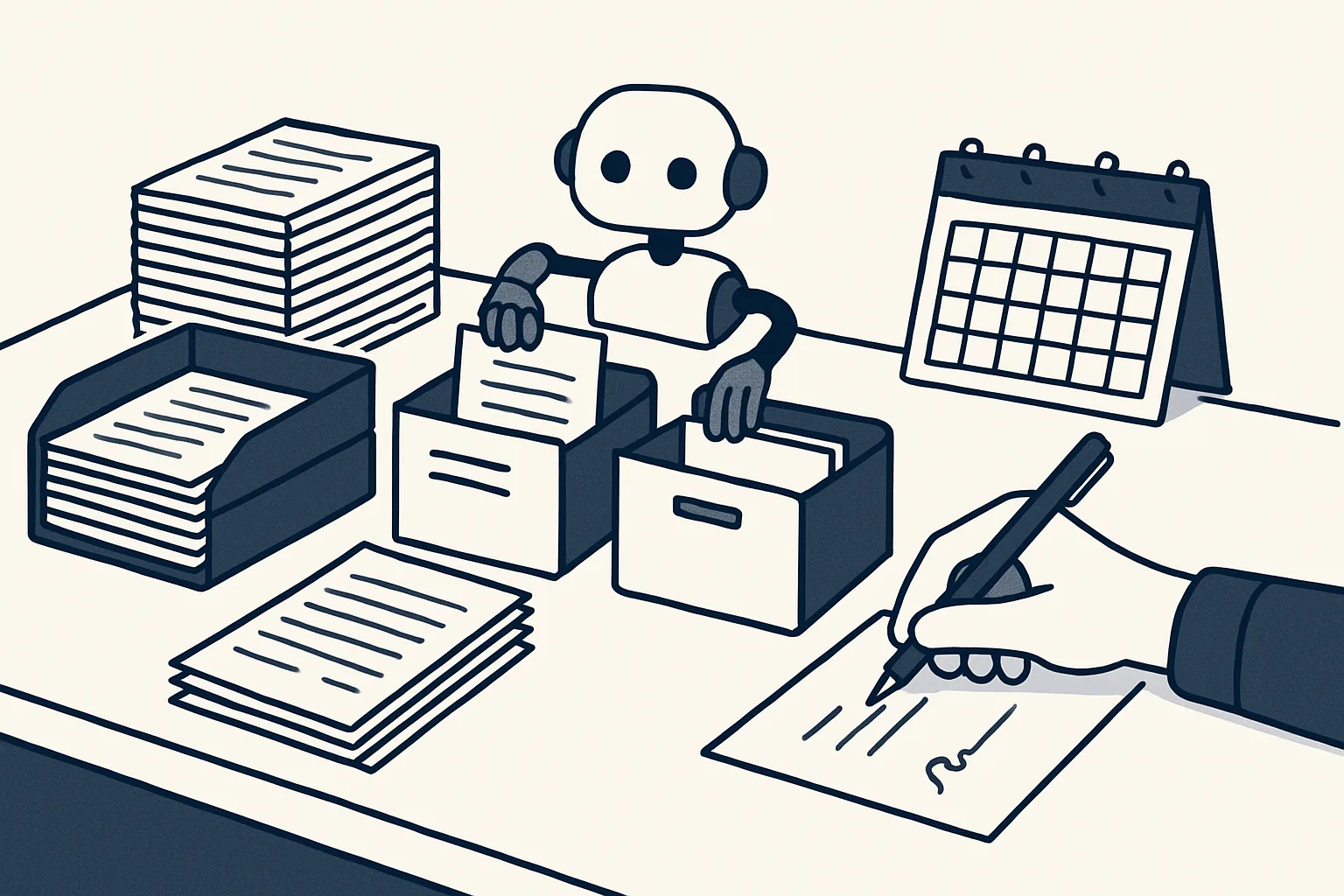
Ask any practice where the time goes and the answer is rarely the advice. It is the weeks of getting a client's records into a state where advice is possible. Documents arrive late, in every format, through every channel. Some are photos of receipts, some are forwarded emails, some are scans of scans. Before anyone can think about the numbers, someone has to read each one, type it in, attach it, file it and chase what is missing.
That routine is exactly where AI for accountants is useful, and where accountant AI tools should stay. The judgment that follows, about treatment, risk and what to tell the client, is the part clients pay for and the part that should never be handed to software.
The routine usually breaks down into a handful of jobs:
- Reading client purchase and sales invoices and entering them in the ledger.
- Turning expense receipts into entries with the image attached.
- Matching bank lines to the invoices and bills they belong to.
- Chasing clients for statements, receipts and missing invoices.
- Filing every document in the same place, the same way, for every client.
- Keeping track of which client emails are still waiting for an answer.
Client documents in, draft entries out
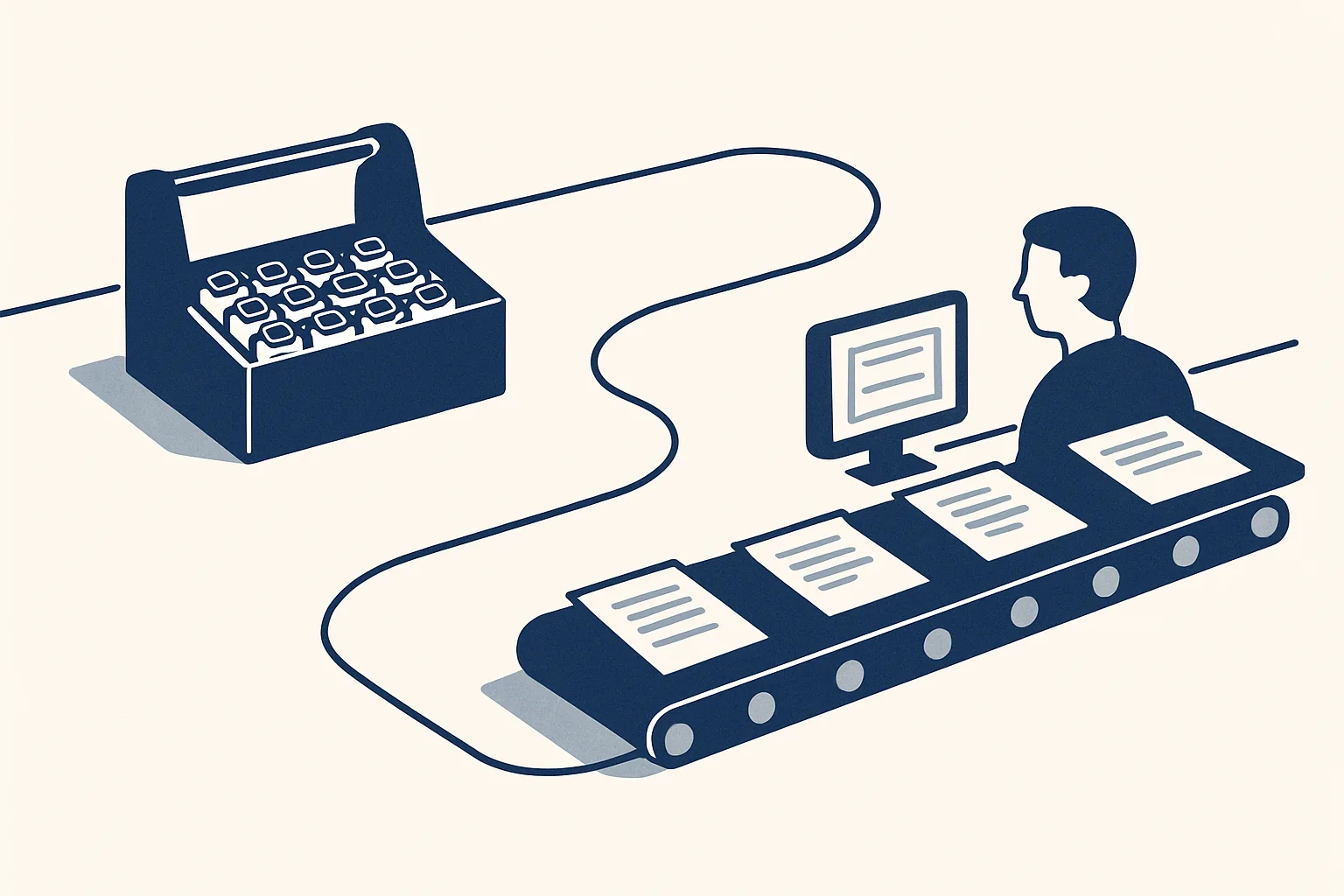
The first job for AI for accountants is reading: a client's invoices and receipts become draft entries, with the PDF attached, for the accountant or bookkeeper to approve.
The supplier bills job is the clearest example, and it is running today for a client. The robot watches a mailbox and a drop folder. When a supplier invoice or credit note arrives, it reads the supplier, the date, the number, the lines and the totals; checks them against the supplier list and against each other; creates a draft bill in the accounting system with the PDF attached; and files the PDF under the supplier. Anything it cannot enter exactly, such as a refund or an unknown supplier, goes to a person instead of being guessed.
Expense receipts work on the same engine: photos and PDFs read and turned into draft expense entries with the image attached, sorted by person and month for approval. That one is offered and built to order rather than running today.
For AI for accounting firms, the important point is where the work happens. Our robots run on our servers but work inside the accounts they are given access to: the mailbox, the folders and the accounting file that already belong to that client. Nothing is moved into a separate system, and when the rental stops, every document and entry is still where it always was.
Bank matching suggestions
With AI for accountants, the bank is a matter of suggestions: the AI proposes which invoice or bill each bank line belongs to, and the accountant confirms or rejects each one.
Bank reconciliation is a matching problem. Each line on the statement has an amount, a date, a reference and usually a name. Each open invoice or bill has the same. Most lines match one item cleanly; some are split payments, combined payments, fees or currency differences. A machine is good at finding the clean matches and at narrowing the hard ones to a short list. It is not good at knowing why a client paid two invoices with one transfer and a deduction.
Bank matching and reconciliation suggestions are offered and built to order; they are not running today. Built our way, the route looks like this:
- New bank lines are read from the statement or the bank feed already in the accounting system.
- Each line is compared with open invoices and bills by amount, date, reference and name.
- Clean matches are proposed as suggestions, not posted.
- Lines with several possible matches are shown with the short list and the reason for each.
- Lines with no match, such as fees or unknown receipts, are listed for a person to decide.
- The accountant or bookkeeper confirms, changes or rejects each suggestion, and every decision is written to the audit record.
Which of your practice tasks could AI draft?
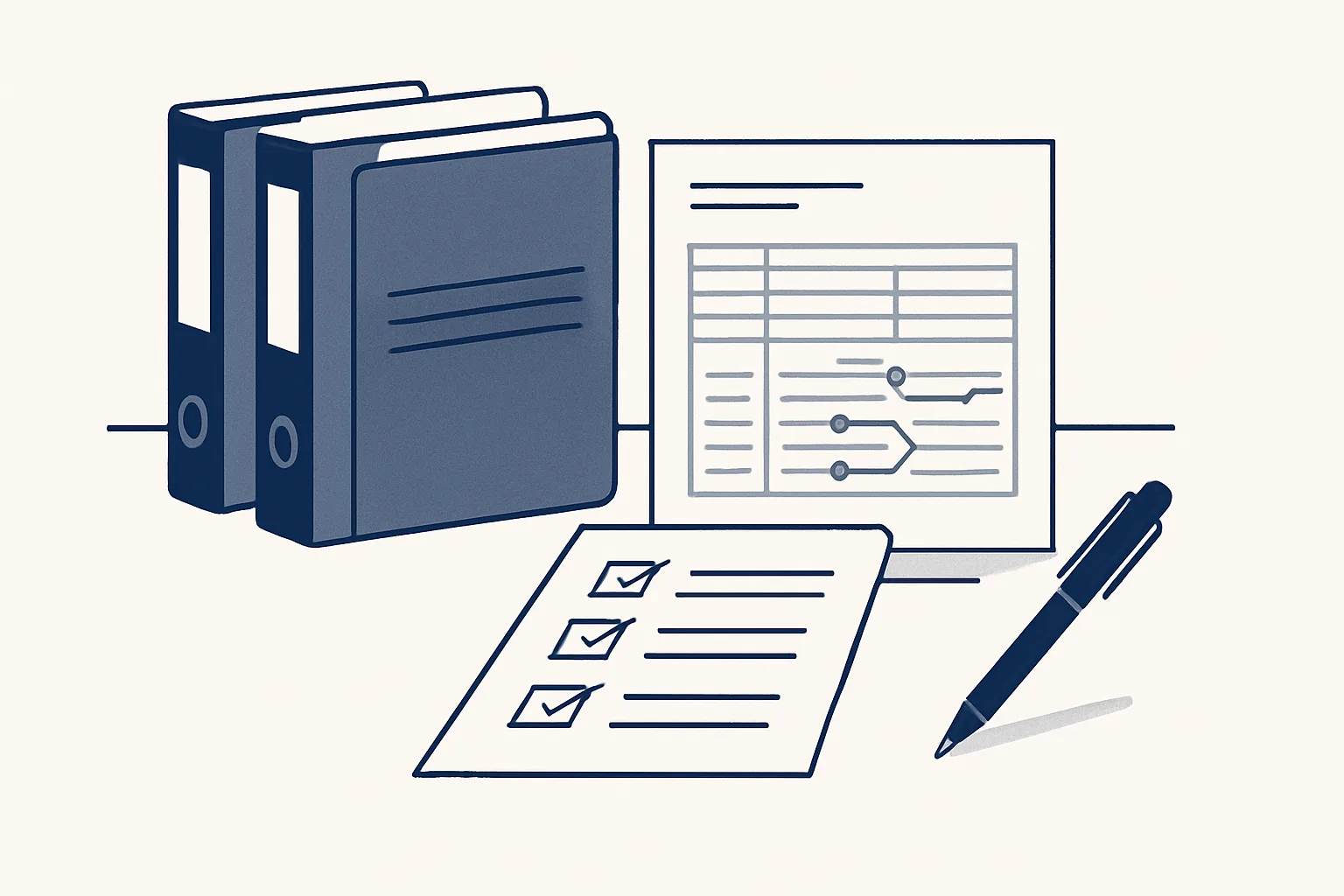
Tick each task your practice does by hand today, the same way for most clients. Anything you leave unticked stays with the accountant.
Chasing missing documents
AI can track which documents each client still owes you and draft the reminder, but a person sends it.
Chasing is the most tedious part of the routine, and a natural job for AI for accountants, because it repeats. The same client is asked for the same statement every month, and the reminder is written from scratch every time. A register of what is expected from each client, compared with what has arrived, makes the gap visible. A drafted reminder listing exactly what is missing makes the chase a matter of reading and pressing send.
Collecting and checking documents, including spotting what is missing or expired, and drafting the request emails is offered and built to order. What runs today is the daily mail digest: every morning, the previous day's new and unanswered emails across several mailboxes, sorted by business, each with a short gist. For a practice that handles many clients through shared mailboxes, that alone keeps client questions from sitting unanswered.
The same register helps at the start of a relationship. A new client's onboarding pack, from identity papers to last year's accounts, can be listed, requested by draft email, checked on arrival for what is missing or expired, and filed with a register row. A person approves the new client record before anyone relies on it.
Nothing is sent by a robot. The reminder waits in the mailbox as a draft, in the voice of the practice, for a person to check.
What stays with the accountant
Whatever AI for accountants you use, review, treatment, advice, filing and every sign-off stay with the accountant.
This is not a limit to work around later; it is the design. A tool that posts entries, sends emails or files returns on its own moves responsibility to software that cannot carry it. A tool that drafts leaves responsibility where it belongs and still removes the typing.
The line is easy to draw once the routine is separated from the decisions. The table sets out where it falls for common practice work. None of this is professional advice on how a practice should be run; your own professional rules come first.
| Work | What AI can draft | What the accountant keeps |
|---|---|---|
| Client bills and invoices | Draft entries with the PDF attached | Approval, treatment of unusual items |
| Expense receipts | Draft entries sorted by person and month | Approval and policy questions |
| Bank reconciliation | Suggested matches with reasons | Confirming every match and signing off |
| Missing documents | A register and drafted reminders | Sending, and deciding when to escalate |
| Client email | A morning digest of unanswered mail | Every reply |
| Tax returns and accounts | Nothing | Preparation, review and filing |
| Advice | Nothing | All of it |
Piloting it with one client
The safest way to try AI for accountants is with one client whose documents arrive often, by the same routes, and whose records you know well.
People ask which is the best AI for accountants. The honest answer is the one that fits the job, not the one with the longest feature list. Many AI tools for accountants are general assistants that answer questions; they help with research and drafting letters but do not touch the ledger. Others read documents but post entries directly. For a practice, the questions that matter are narrower: does it produce drafts rather than posted entries, does it hand back what it cannot do exactly, does it keep an audit record, and does it work inside the client's own accounts?
A pilot with one client answers those questions with real documents. Pick a client with a steady flow of supplier bills, agree the access, and compare the drafts with what your team would have entered. You will see quickly what is drafted cleanly, what comes back as an exception and what the client's records need before more can be handed over.
Keep the pilot honest by measuring it the way you would measure a new hire's first month: how many documents came in, how many were drafted cleanly, how many came back, and how long the review took. Those are your own figures, from your own client, and they are a better guide than any claim made for AI for accountants in general.
Ours is a done-for-you service, rented monthly: we build the robots, run them on our servers and look after them. The price is one monthly figure per workflow, stated in the quote. A kill switch stops any robot in one command, and nothing is switched on without your yes.
Questions
How can an accountant use AI?
On the routine before judgment: reading client invoices and receipts into draft entries, suggesting bank matches, tracking missing documents and drafting reminders. The accountant reviews, approves and advises.
Which AI is the best for accountants?
The one that fits the job. For ledger work, look for drafts rather than posted entries, exceptions handed back to a person, an audit record of every action, and work done inside the client's own accounts.
Will AI replace accountants?
It takes reading and typing out of the work. Treatment, review, advice and sign-off need professional judgment and responsibility, and those stay with the accountant.
Can AI do bank reconciliation?
It can suggest matches between bank lines and open invoices and bills, and narrow the hard cases to a short list. A person should confirm every match and sign off the reconciliation. We offer this built to order.
Is it safe to give an AI access to client accounts?
Ask any provider exactly what access it needs, what it can change and how it is stopped. Ours only produce drafts, never send or pay, write every action to an audit record and can be stopped in one command.
Want hours back from this work?
Write to [email protected] with the routine work one client generates each month and the hours it takes, and we will tell you plainly what AI could draft for your practice.
Talk to us Related service: Bank and receivables