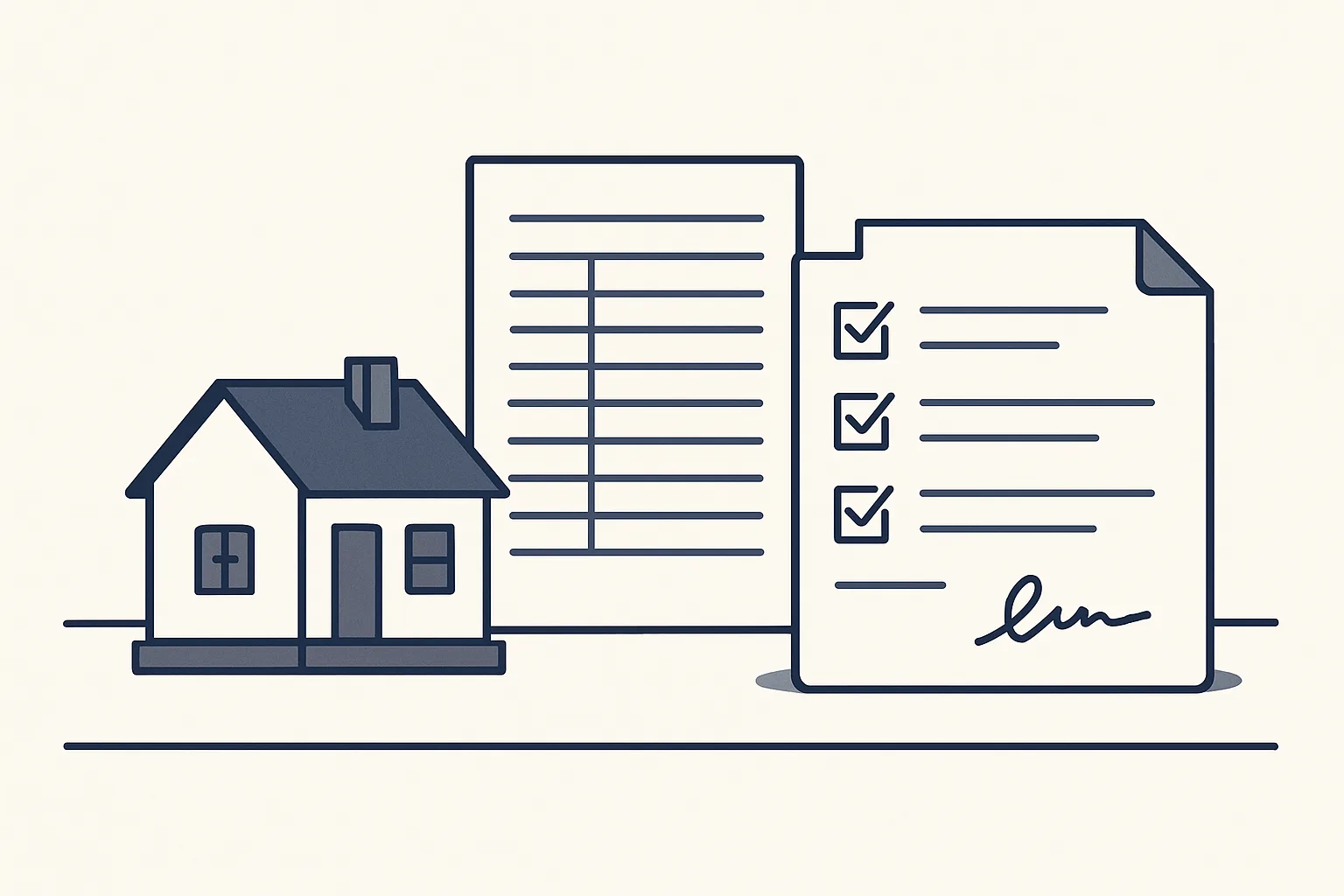
AI for real estate is most useful behind the scenes: logging every enquiry, drafting first replies and follow-ups from your own listings and past answers, collecting buyer and seller documents, and filing signed paperwork. The agent still sends every message and handles every negotiation.
Where admin slows agents down
AI for real estate helps most with the admin around a sale or a let, not with the selling itself.
An agent's day is split between people and paperwork. The people part, viewings, valuations, negotiations and the phone call that keeps a nervous buyer on side, is the job. The paperwork part is everything around it: enquiries arriving through portals, the website and personal mailboxes; replies that have to go out quickly; identity and proof-of-funds documents to collect; contracts to sign and file.
Admin slows agents down in predictable places. An enquiry that arrives late on a busy day waits until the next morning. A promised follow-up slips. A buyer's documents arrive in three emails over a week, and nobody is sure which are still missing. A signed contract sits in someone's downloads folder.
That is where AI for real estate agents earns its place: in the steps that are frequent, rule-based and easy to check. The relationship stays with the agent.
Picture a small sales and lettings office on a Saturday. Three viewings are booked, the phones are busy, and a dozen portal enquiries arrive while everyone is out. By Monday morning some of those people have already booked viewings elsewhere. Nobody did anything wrong; there was simply nobody free to type. The useful kind of AI for real estate is the kind that has the replies drafted and waiting when the agent gets back to the desk.
Every enquiry on one register
The first step is a single register where every incoming enquiry is logged, whichever mailbox or portal it came through.
A register is a plain list, usually a shared sheet, with one line per enquiry: who wrote, when, about which property, through which channel, and what has happened since. With every enquiry on one list, nothing is lost between colleagues, and the office can see at a glance which enquiries have had no reply.
Our enquiries and follow-up AI employee is offered and built to order; it is not yet running for a client. It is designed to read incoming enquiries from the agency's own mailboxes, log each one on the register, and mark when a reply or a follow-up is due.
Used this way, AI for real estate does not change who the agency talks to. It works on incoming enquiries only. There is no cold outreach, no bought lists and no mass mailing: automation for real estate here means answering the people who wrote to you, faster and more consistently, not writing to people who did not.
Draft first replies and follow-ups
Lead follow up automation, done well, means the agent finds a draft reply waiting, written from the agency's own listings and past answers, and sends it after a read.
A first reply to a property enquiry usually repeats what the agency has said many times: whether the property is still available, how viewings are booked, what documents a buyer will need. A draft written from the agency's own material saves the typing while keeping the agency's voice.
Follow-ups are where many enquiries quietly go cold, because each one depends on somebody remembering it on the right day. When the register shows a reply is due, the draft follow-up is prepared in the mailbox. The agent decides whether to send it, change it or call instead.
The steps for one enquiry look like this.
- An enquiry arrives in the agency mailbox from a portal, the website or a direct email.
- It is logged on the register with the property, the channel and the time it arrived.
- A draft first reply is written from the listing details and the agency's past answers, and saved in the mailbox.
- The agent reads the draft, changes what needs changing and sends it.
- When a follow-up is due, a draft follow-up is prepared and the register is updated.
- Every action is written to an audit record, so the office can see what happened to each enquiry.
Where would AI help your agency first?
Tick each statement that is true of your agency today. The more you tick, the more the admin around enquiries and documents is costing you.
Collecting buyer and seller documents
Document collection means the documents a buyer, seller or tenant must provide are requested, collected, checked for what is missing or expired, and filed against the right deal.
This is the least visible part of AI for real estate, and often the most welcome. Every transaction has its list: identity documents, proof of address, proof of funds or a mortgage pre-approval for a buyer; title documents and certificates for a seller; references and identity for a tenant. Chasing them is repetitive work that an agent should not have to remember.
Our client and supplier onboarding AI employee, offered and built to order, is designed to do this with the same engine: it prepares a draft email requesting the documents, records what has arrived, checks for what is missing or past its date, and files each document with a line on the register. A person approves the new record.
For lettings, AI for property managers follows the same pattern: tenant documents collected and filed, and incoming tenant emails sorted with a draft reply prepared for the property manager to check and send. That drafted-reply workflow is also offered and built to order.
Contracts signed online and filed
Online contract signing is running today: the agreement becomes a private web page that each party signs, and a certificate records who signed, when and what.
Each party signs with a drawn signature, a typed name and a consent line. The signature certificate PDF records who signed, when, and a fingerprint of the exact document, so any later change to the document shows. No third-party signature service is involved.
Whether a given document can be signed electronically depends on the document and on the rules where you work, so check with your own lawyer before moving a contract type online. For agency agreements, terms of business and similar paperwork, signing online removes the printing, scanning and posting.
The table below sums up which pieces run today and which are built to order.
| Stage | Admin involved | What an AI employee prepares | Status |
|---|---|---|---|
| Enquiry | Logging, first reply | A register line and a draft first reply | Offered, built to order |
| Follow-up | Remembering when to chase | A draft follow-up when a reply is due | Offered, built to order |
| Documents | Requesting, checking, filing | Draft requests, a missing-items check, filed documents | Offered, built to order |
| Agreement | Signing and storing | A private signing page and a signature certificate | Running today |
| Inbox overview | Seeing what is unanswered | A morning digest of new and unanswered emails across mailboxes | Running today |
What stays personal, and where to start
Everything that depends on trust and judgement stays with the agent; with AI for real estate, the automation prepares and the agent decides and sends.
That division is deliberate. Clients choose an agent for local knowledge, honest advice and a steady hand in a negotiation, and none of that can be drafted. What can be drafted is the routine around it, and every hour taken out of that routine is an hour back for the clients themselves.
This set-up does not value properties, write listing copy, set prices or negotiate. It does not answer clients by itself: nothing is sent by a robot, and every message goes out from the agent after a read. It works only with incoming enquiries and the agency's own documents.
Our AI employees are rented monthly and run on our servers against the agency's own mailbox, folders and sheets. The agency's enquiries, client documents and contracts stay in its own accounts. If the rental stops, the workflow stops and the agency keeps everything. The price is one monthly figure per workflow, stated in the quote.
A sensible place to start depends on where the agency loses most time:
- If enquiries go unanswered or slip between colleagues, start with the register and draft first replies.
- If deals stall waiting for paperwork, start with document collection.
- If agreements are still printed, signed and scanned, start with online signing, which runs today.
- If the inbox itself is the problem, start with the morning digest of new and unanswered emails, which also runs today.
Questions
How can real estate agents use AI?
Behind the scenes: logging enquiries, drafting replies and follow-ups from the agency's own material, collecting client documents and filing signed paperwork. The agent still sends every message and handles every negotiation.
Can AI follow up with leads automatically?
It can prepare the follow-up when one is due and put it in your mailbox as a draft. Ours never sends by itself; the agent reads it and presses send.
Will AI replace real estate agents?
No. Viewings, valuations, negotiation and trust are the job, and they stay with people. AI takes typing and chasing off the agent's desk.
Does it write property listings or valuations?
No. This set-up handles enquiries, documents and signing. It does not value properties, set prices or write listing copy.
Can clients sign agreements online?
Yes, our signing page runs today, with a certificate recording who signed, when and a fingerprint of the document. Whether a particular document may be signed online depends on the document and local rules, so check with your lawyer.
Want hours back from this work?
Write to [email protected] with the hours enquiries and client paperwork take your agency each week, and we will tell you plainly where to start.
Talk to us Related service: Enquiries and follow-up