Generative AI models are the trained programs behind AI writing, pictures, voices and video. Each kind makes a different thing, and none of them knows your business unless you show it. Pick the model for the job, test it on real examples and read what it makes.
What are generative AI models?
A generative AI model is the trained program inside an AI tool that makes the new text, picture or sound.
Think of a bakery apprentice who has read ten thousand recipe books. They can't taste anything. They just know what recipes usually look like, so when you ask for a loaf with seeds, they write one that sounds right. A model works like that apprentice, on a vast scale.
The tool you type into is the shop front. The model is the person in the back doing the work. Different tools can use different models, and one tool may use several.
So when you hear "the model" in a news story, it means the engine, not the app on your screen.
What kinds of generative AI models are there?
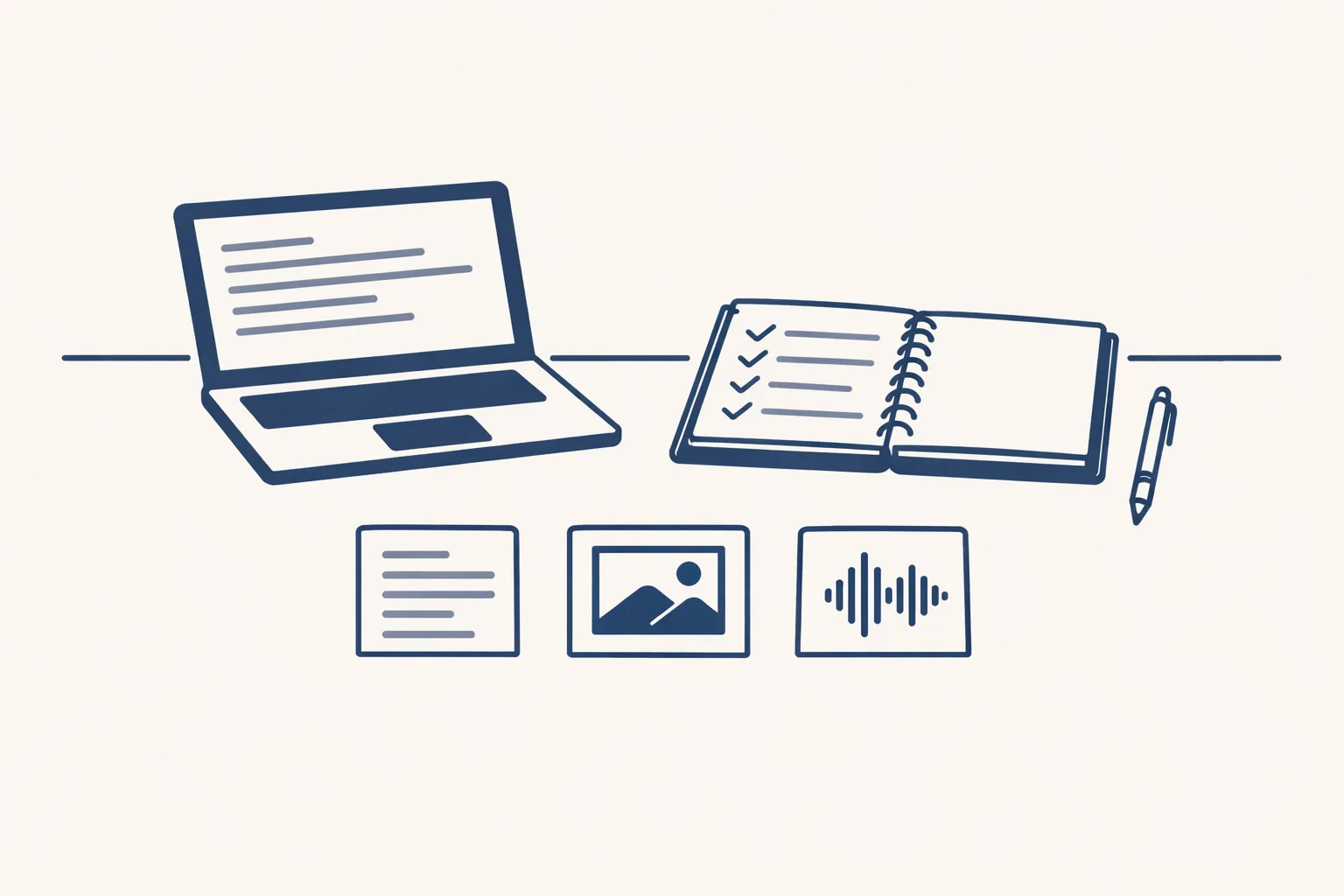
The main kinds are named after what they make: text, images, voices and video.
Each one takes a request in and gives something different back. Here are the common ones, with a plain business use for each.
| Kind of model | You give it | It gives back | A plain business use |
|---|---|---|---|
| Text | A question or instructions | Written words | A draft reply or a summary of a long document |
| Image | A description | A picture | A banner or a product background |
| Voice | Written text | Spoken words | A voiceover for a short video |
| Video | A description or pictures | Moving pictures | A short clip for social media |
| Mixed | Text, pictures or both | Text, pictures or both | Reading a photo of a receipt and describing it |
How does a model learn, in simple words?
A model learns patterns from a huge number of examples, not facts from a book of truths.
That's why it can write a smooth paragraph about your trade and still get a detail wrong. It knows how such paragraphs usually sound. It doesn't know your prices, your suppliers or your opening hours unless someone tells it.
Picture a new hire who's read every plumbing manual ever written but never met your customers. They can talk the talk. They still need your price list on day one.
This is the heart of using models well. They are very good at the shape of things, and they need you for the facts.
Say a model has read a thousand shop websites. It knows that a good "about" page has a short story, a contact line and a few photos. It still can't tell you when your shop closes on Saturday.
Yes, and that's where it gets useful for a business.
When a model is shown your past replies, your price list and your policies as it writes, its drafts sound like you and use your facts. A bookkeeping office, for example, can give it last year's client letters, so a new letter follows the same tone.
The model doesn't keep your files for itself. It reads them for the job, writes the draft and you read it. If the documents are out of date, the draft will be too, so keep them current.
That's why the quality of your own records matters more than which model is fashionable this month.
Which jobs in your business suit a generative AI model?
Tick each job that you do often and that follows a repeating pattern. These are the best places to try a model.
Does a bigger model mean a better result?
Not always. The right model for the job beats the biggest one.
A small restaurant that wants a friendly reply to a booking email doesn't need the most powerful model on the market. A fast, simple one does the job, and costs less. A task that reads a long contract with care might need more.
What matters most is what the model is given. A model that can see your real price list, your past replies and your policies will usually do better than a larger one working from guesses.
These are the questions worth asking about any model you're offered.
Speed and cost matter too. Bigger models are usually slower and cost more per answer. For a job you repeat every day, that adds up.
- What is it meant to make: words, pictures, voice or video?
- What does a mistake cost in this job? A typo in a draft is cheap. A wrong price sent to a customer isn't.
- What will it be given: only the question, or your own documents too?
- Who reads the result before it goes anywhere?
- Can it be tested on ten real examples from your work before you rely on it?
How do you choose for your business?
Start with the job, not the model.
A wholesaler who wants help with quotes should begin by writing down what a good quote looks like. A florist who wants social posts should collect a handful of posts she likes. Only then does it make sense to pick a tool.
- Write down the job in one sentence, such as "draft a reply to a price enquiry".
- Decide what a good result looks like, with two or three real examples.
- Try the job with real inputs and see where the model slips.
- Give it your own material, like past replies and price lists, and try again.
- Decide who reads the result, and where it goes next.
- Review how it's going after a few weeks, and adjust.
Where do we fit in?
We pick and run the models inside the workflows we build, so you don't have to choose one.
For your website and content, models are also readers. AI assistants use them to read your pages and write answers. That's why our SEO and GEO work, which runs today, writes each page with a plain answer first, adds structured data and a sitemap, and publishes a short guide file for assistants.
Every step starts with your approval, then you choose when it goes automatic. The checklist below helps you spot the jobs in your business that suit a model.
Questions
What is a generative AI model in simple words?
It's the trained program inside an AI tool that makes new text, pictures, voices or video from a request.
Are all generative AI models the same?
No. Some make text, some pictures, some voices and some video. They also differ in speed, cost and how carefully they follow instructions.
Do I need to pick a model myself?
Usually not. Many tools choose for you, and we pick the models inside the workflows we build.
Can a model learn my business?
It can use your documents and past work as examples when it writes. It doesn't know your business on its own.
Why do models sometimes get things wrong?
They learn patterns, not facts. They can write something that sounds right and isn't, so the important facts should come from your own records.
Tell us your workflow. We will build it around you.
Write to [email protected] with the jobs that take your time, and we'll tell you plainly which ones suit a model.
Talk to us Related service: SEO and GEO